Walk a stressed green with a veteran superintendent and the conversation rarely starts with chemistry. It starts with soil. Specifically, with what the profile looks like when you pull it apart, where the roots stop, how much biological activity is actually present in the root zone, and whether the physical architecture down there is helping or working against you. Soil microbiome management rarely makes the top of the agronomic conversation when those questions come up. In most cases, it belongs at the center of it.
The rhizosphere, the dynamic biological zone surrounding turfgrass roots, is a living system of bacteria, fungi, protozoa, enzymes, and polysaccharides that drives nutrient cycling, root architecture development, and natural antagonism against plant pathogens. When that community is intact and biologically diverse, turf performs differently. Disease pressure is lower. Recovery from traffic and heat stress is faster. Dry spots are less persistent. Thatch decomposes rather than accumulates. Most programs acknowledge this biology exists. Far fewer build a deliberate soil microbiome management strategy around it.
What Does the Research Actually Show About Soil Microbiome Management and Turf Performance?
Published research in Applied and Environmental Microbiology documented disease-suppressive soils in turfgrass systems, confirming that high soil microbial diversity develops natural antagonism toward plant pathogens. The same research found something that should shape how any superintendent thinks about spray program sequencing: intensive synthetic fungicide use suppressed the beneficial microbial populations responsible for that natural disease suppression. Sequencing matters, and it matters in ways that most input programs are not currently designed to account for.
Research from Frontiers in Microbiology demonstrated that the bacteria and fungi colonizing the soil-rhizosphere-root continuum play direct roles in turfgrass stress tolerance, activating plant defense pathways that support performance under compaction and traffic load. These are not isolated laboratory findings. They describe biological processes that are either functioning or failing in your root zone during every stress event of the season, and they make a strong scientific case for treating soil microbiome management as a core program variable rather than a supplemental consideration.
The BioPlex GrowSmart technical documentation on golf course turf management puts it plainly: research shows that most synthetic fertilizers, insecticides, and fungicides negatively impact the bio-culture and root structure formation of turfgrass. The relative importance of the rhizosphere cannot be overstated. It provides the comprehensive biological foundation for all turfgrasses and ornamentals on a golf course property. Leaves, shoots, crowns, roots, rhizomes, and stolons are all co-dependent on healthy soil and a diverse bio-culture.
Why Do Dry Spots, Thatch Buildup, and Slow Recovery Keep Appearing in the Same Locations?
These patterns have a biological explanation that gets underweighted in most diagnostic conversations. Soil aggregation, the process by which microbial activity binds soil particles into stable macro-aggregate structures with improved pore geometry, governs air and water infiltration at the root zone level. When soil microbial biomass is low and functionally thin, organic matter accumulates rather than decomposes, driving thatch. Soil structural integrity degrades, moisture distribution becomes uneven, and compaction resistance decreases.
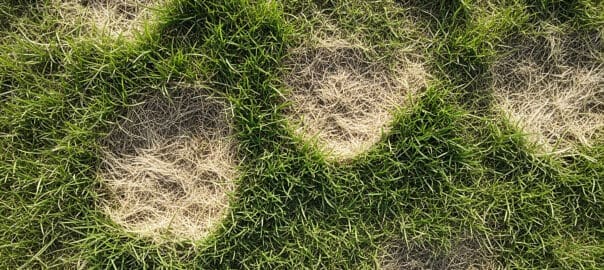
Dry spots are, in most cases, a hydrophobic soil condition driven by fungal mycelium residue and degraded soil structure in specific zones. Treating the surface symptom addresses the immediate playability issue. Consistent soil microbiome management that rebuilds microbial community diversity and soil aggregate stability in those zones addresses the underlying physical condition that keeps producing it.
For superintendents managing USGA-specification greens where cation exchange capacity and organic carbon are structurally limited, this distinction between surface treatment and root zone reconstruction is practically significant. Every aerification window is an opportunity to work on the condition causing the symptom rather than the symptom itself.
How Does Biochar Engineering Change the Soil Microbiome at the Root Zone Level?
Biochar functions as a permanent habitat matrix for soil microbial communities. Its highly porous carbon structure creates colonization surface area that conventional amendments cannot replicate, providing stable sites for the bacteria and fungi responsible for nutrient cycling, organic matter decomposition, and disease pressure management through natural pathogen suppression. It is one of the more durable structural tools available for long-term soil microbiome management in a high-traffic turfgrass environment.
The Iowa State University research on sand-based root zone media is directly applicable to golf course infrastructure: media containing 25 percent biochar by volume retained 260 to 370 percent more water compared to controls, while nitrogen leaching decreased as biochar concentrations increased. A meta-analysis published in the Springer journal Biochar confirmed an overall positive impact of approximately 21 percent on soil microbial biomass carbon across a broad range of soil types, with repeated applications increasing soil microbial biomass carbon by more than 50 percent compared to single applications. That compounding effect over multiple seasons is what separates a one-time application from a genuine root zone development program.
BioPlex BioCHAR Eco-Builder and BioPlex BioCHAR DRY Black-Gold G, with its 0.5 to 2 mm particle size sized for aerification hole incorporation and topdressing mixes, deliver this structural foundation directly into the root zone during aerification, when the soil is most receptive to amendment and root extension is most active.
What Role Do Humic Acids and Fulvic Acids Play in Supporting Soil Biology?
Humic acids are not fertilizers, and treating them as such misses most of their agronomic value in a soil microbiome management program. Their primary function is to improve the capacity of both the soil and the plant to use what is already present, and to sustain the biological populations that do the long-term work of nutrient cycling and root zone function.
In soils, humic substances reduce erosion by increasing the cohesive forces of fine colloidal particles. They provide energy and mineral requirements for soil microorganisms, the algae, yeasts, bacteria, fungi, nematodes, and mycorrhizae that influence soil fertility and plant health. In sandy soils, they add essential organic material necessary for water retention and enhance the ability to hold plant-available nutrients that would otherwise move through the profile. In clay soils, they help break up compacted zones and allow enhanced water penetration and root zone development.
Research shows that humic substances enhance nutrient uptake, reduce uptake of toxic elements, and improve plant response to soluble salts in highly maintained turfgrass stands. Regular use reduces fertility demand over time, because the soil and plant system become progressively more capable of utilizing existing nutrients. Ultimately, when sufficient organic material is present within the soil and biological processes are functioning well, the system begins moving toward self-sufficiency through microbial processes and humus production.
BioPlex FULVIC POWER+ leverages the low-molecular-weight mobility of fulvic acids to move retained nutrients deeper into the active root zone, extending the nutrient-availability benefit of the broader biological program through zones that granular applications alone do not reach.
How Does Cold-Processed Seaweed Support Root Architecture and Stress Tolerance?
Cold-processed seaweed extract delivers a complex of biologically active compounds, natural plant growth regulators, cytokinins, gibberellins, betaines, vitamins, macro and micronutrients, and carbohydrates that directly feed soil microbial populations. The cold extraction process is not a marketing distinction. Heat processing degrades or destroys these components. What you get in a cold-processed product is what the research documents.
One of the most consistent physiological responses to seaweed application in turfgrass is the development of a more vigorous, fibrous root system with a larger surface area for nutrient and water uptake. In turfgrasses treated with seaweed alongside minimal nitrogen levels, research has shown increased cytokinin levels in the root, encouraging strong collection points for photosynthates and nutrients and driving fibrous root mass development deeper into the profile. Seaweed applications have a dose-dependent response, being more effective at lower concentrations. With seaweed, less is more.
Research published in Frontiers in Plant Science reviewing Ascophyllum nodosum-derived biostimulants confirmed consistent improvements in root growth, lateral root formation, drought and heat stress tolerance, and pathogen resistance across multiple application rates and intervals. The biological mechanism operates through multiple compound classes simultaneously, which is why well-formulated seaweed-based inputs deliver results across a range of stress conditions rather than performing narrowly.
Is Chitosan a Real Disease Management Tool, or Is That Claim Overstated?
Chitosan spent decades regulated as a fungicide by the US-EPA before receiving its 25(b) exemption around 2020. That regulatory history is itself a meaningful data point. The EPA does not classify materials as fungicides unless the biological activity warrants it, regardless of the source compound.
Its mechanism in turfgrass is well-documented. Chitosan functions as an elicitor of induced systemic resistance, activating the plant’s own defense pathways against soil-borne plant pathogens rather than acting as a direct chemical control. Combined with beneficial bacterial populations and humic acid inputs, published research in Frontiers in Microbiology confirmed synergistic effects on plant growth, disease resistance, and soil microbiome activation. In the context of a broader soil microbiome management program, chitosan is not a standalone fungicide replacement. It is a biological activator that strengthens the system already being built.
BioPlex PATHOGEN Defense POWER+ brings this into a program context alongside the natural biological suppression that a well-managed soil microbiome provides, adding a targeted defense layer without the microbial disruption that intensive synthetic fungicide programs have been shown to produce.
What Does a Practical Soil Microbiome Management Program Look Like Season to Season?
Aerification is the highest-leverage delivery event in the annual program, and that does not change in a biology-first approach. What changes is what goes into the holes.
Incorporating granular biochar into aerification holes places stable carbon habitat directly where root extension and microbial colonization are most active. Liquid humic and fulvic inputs applied at aerification move deep into the disrupted root zone profile, activating biological populations through zones that granular applications cannot reach on their own. These two inputs together, structural carbon and biological activators delivered simultaneously into a disrupted profile, represent the foundation of a practical soil microbiome management program that compounds in value with every annual application cycle.
BioPlex 5M BioBUILDER N 10-0-0 plus 10% Silica adds a dimension that often gets separated from the biological conversation but belongs in it. Silica strengthens cell wall integrity and improves structural resistance to disease pressure and mechanical stress, reinforcing the physical structures that biology is working to support.
BioPlex TURF POWER+ and BioPlex 808 GREEN POWER+ provide the biological stimulants and plant-available carbon that reinforce active root zone function during post-stress recovery periods, when soil microbiome populations are rebuilding and root extension is resuming after heat or traffic stress events.
Seasonal timing shapes how these inputs interact. Spring programs that combine biochar and biological inputs ahead of peak stress season establish the structural and microbial foundation before demand is highest. Summer programs sustain biological activity and root zone function under thermal load. Fall programs are where the compounding investment happens, rebuilding microbial biomass, extending root architecture, and depositing stable carbon that carries into the following season. The programs consistently performing at the highest level after three or four seasons of committed soil microbiome management are not doing more than everyone else. They started earlier and stayed consistent.
Research from Crop Science confirmed that perennial turfgrass systems managed with biology-first inputs deliver enhanced water infiltration, reduced chemical runoff, improved soil carbon sequestration, and biological disease suppression through diverse microbial communities. Those outcomes build on each other, and they build faster in programs that treat soil biology as a system to develop rather than a variable to manage reactively.
Build the Root Zone Your Turf Program Deserves
BioPlex Organics has been developing science-based plant health and soil biology solutions for green industry professionals since 1987. The Biology First product system, including BioPlex BioCHAR Eco-Builder, BioPlex BioCHAR DRY Black-Gold G, BioPlex 5M BioBUILDER N 10-0-0 plus 10% Silica, BioPlex TURF POWER+, BioPlex 808 GREEN POWER+, BioPlex PATHOGEN Defense POWER+, and BioPlex FULVIC POWER+, gives turf managers the structural, biological, and nutritional tools to engineer a root zone that performs.
Sources
- Akther, S.M., Hu, J., Miller, G., and Shi, W. (2025). “Foot traffic on turf primarily shaped the endophytic bacteriome of the soil-rhizosphere-root continuum.” Frontiers in Microbiology, 16, Article 1488371. https://doi.org/10.3389/fmicb.2025.1488371
- Brockhoff, S.R., Christians, N.E., Killorn, R.J., Horton, R., and Davis, D.D. (2010). “Physical and Mineral-Nutrition Properties of Sand-Based Turfgrass Root Zones Amended with Biochar.” Agronomy Journal, 102(6), pp. 1627-1631. https://doi.org/10.2134/agronj2010.0188
- Chou, M.Y. et al. (2025). “Fungicide use intensity influences the soil microbiome and links to fungal disease suppressiveness in amenity turfgrass.” Applied and Environmental Microbiology, Article aem.01771-24. https://doi.org/10.1128/aem.01771-24
- Cozzolino, V., Mazzei, P., Drosos, M., Monda, H., Hu, Z., and Piccolo, A. (2021). “Cooperation among phosphate-solubilizing bacteria, humic acids and arbuscular mycorrhizal fungi induces soil microbiome shifts and enhances plant nutrient uptake.” Chemical and Biological Technologies in Agriculture, 8, Article 31. https://doi.org/10.1186/s40538-021-00230-x
- Guo, L. et al. (2025). “Impact of Biochar Amendment on Soil Microbial Biomass Carbon Enhancement Under Field Experiments: A Meta-Analysis.” Biochar, 7, Article 2. Springer Nature. https://link.springer.com/article/10.1007/s42773-024-00391-6
- Shukla, P.S., Mantin, E.G., Adil, M., Bajpai, S., Critchley, A.T., and Prithiviraj, B. (2019). “Ascophyllum nodosum-Based Biostimulants: Sustainable Applications in Agriculture for the Stimulation of Plant Growth, Stress Tolerance, and Disease Management.” Frontiers in Plant Science, 10, Article 655. https://doi.org/10.3389/fpls.2019.00655
- Silva, M.S.R. et al. (2021). “Humic Substances in Combination With Plant Growth-Promoting Bacteria as an Alternative for Sustainable Agriculture.” Frontiers in Microbiology, 12, Article 719653. https://doi.org/10.3389/fmicb.2021.719653
- Multiple authors. (2024). “The role of turfgrasses in environmental protection and their benefits through sustainable management.” Crop Science, Article csc2.21383. https://doi.org/10.1002/csc2.21383