Category Archives: Soil Health & BioChar

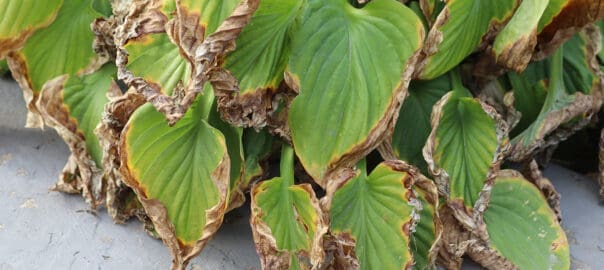
Leaves showing signs of heat stress

What Does Amino Acid Humic Fulvic Acid Actually Do to Summer Heat Stress?

Amino acid humic fulvic acid summer heat stress is not one failure. It is a cascade. By the time you see it on the turf surface or in the canopy of a newly installed ornamental, the physiological breakdown has been compounding beneath the surface for weeks. Cell membranes are losing integrity. Stomata have been closing to restrict water loss. Nutrient uptake in the root zone has slowed or stopped entirely. And photosynthetic output has been falling off long before the first visual symptom appears.

The professionals who manage this window well are not reacting to what they can see. They are working ahead of what they know is coming.

Why Does Summer Heat Stress Hit So Hard, So Fast?

Heat and drought create overlapping failures that reinforce each other. As temperatures climb, stomatal closure reduces CO2 intake and slows photosynthesis. Cellular osmotic balance is disrupted. Enzyme systems responsible for nutrient movement lose efficiency. At the same time, the root zone, already compressed by compaction and reduced biological activity in summer, becomes less capable of supplying what the plant needs at the exact moment demand is highest.

For creeping bentgrass maintained at close mowing heights, this pressure is acute and unforgiving. For landscape ornamentals and recently transplanted trees, the same cascade drives shoot dieback and root decline that no irrigation adjustment fully corrects. Understanding what is really driving stress at the physiological level is the first step toward building a program that actually prevents it.

What Do Amino Acids Actually Do Under Heat and Drought Pressure?

L-amino acids function as osmolytes inside plant cells. They accumulate in tissue to maintain osmotic balance and cellular turgidity when water availability drops, and this response is well-documented in field-relevant research. Published studies confirm that L-proline and glycine betaine build up in stressed leaf tissue to protect membrane integrity and support enzyme function when heat disrupts normal cellular chemistry (Hayat et al., 2012; Khalid et al., 2022).

Beyond osmotic regulation, L-amino acids serve as natural chelators for nutrient ions in the root zone. When heat and drought conditions would otherwise make fertility inputs unavailable, amino acid chelation keeps those nutrients accessible to the plant. Research published in Horticulturae in 2025 found that amino acid biostimulants applied to creeping bentgrass under combined heat and drought stress improved turf quality, photochemical efficiency, and antioxidant enzyme activity while measurably suppressing oxidative stress damage in leaf tissue (Zhang et al., 2025).

The practical outcome is a plant that has better tools to maintain function rather than shutting down when summer heat stress peaks.

How Do Humic Acids Protect the Root Zone and Plant Through Peak Summer?

Humic acids address amino acid humic fulvic acid summer heat stress from the soil up. Their value during this window is structural and biological, not fertility-based. Humic acids function as water sponges within the soil profile, creating a desirable structure that facilitates infiltration and holds moisture in the root zone where roots can access it.

Applied as a foliar spray, humic acids significantly reduce water evaporation from plant surfaces, increase cellular water uptake, and intensify enzyme systems within the plant (BioPlex Organics, Growing Smart). Research confirms that humic substances enhance carbohydrate content and nutrient concentration in leaf blades and sheaths while under stress, directly supporting the energy reserves the plant needs to recover between heat events. Peer-reviewed research published in Scientific Reports demonstrated that humic acid upregulates heat-shock protein gene expression in plant tissue, including HSP101, HSP81.1, and HSP17.6A, providing molecular chaperone protection during heat stress events. A 2025 review in Plants confirmed that humic acids alleviate abiotic stress through multiple pathways, including water retention and root zone structure improvement.

For soil health and root zone support, humic acids also sustain the rhizosphere biology that drives long-term plant performance. A biologically active root zone is not a background benefit during summer. It is a front-line defense.

What Makes Fulvic Acid a Critical Part of Summer Nutrient Management?

Fulvic acids are smaller in molecular weight than humic acids, which allows them to penetrate plant cell membranes more readily and accelerate the uptake and translocation of nutrients through plant tissue. When heat has disrupted normal nutrient mobility in both the root zone and inside the plant, fulvic acids provide a delivery pathway that bypasses the bottlenecks that stress creates.

Research published in the Journal of Soil Science and Plant Nutrition in 2024 confirmed that fulvic acid application under heat stress conditions improves cell membrane stability, increases proline accumulation in leaf tissue, and improves overall nutrient uptake compared to untreated controls. A 2016 study in Acta Biologica Cracoviensia found that fulvic acid pre-treatment maintained higher relative water content in plant leaf tissue under combined heat and salt stress (Dinler et al., 2016). Every other input in your summer program moves more effectively when fulvic acid is part of the application sequence.

Why Do These Three Compounds Work Better Together Than Any Single Input?

The amino acid humic fulvic acid summer heat stress connection is a systems story. Each compound covers a different failure point in the same cascade, and together they address what no single-input approach can.

Here is how the three layers work together across the summer stress window:

  • L-amino acids maintain cellular turgidity and osmotic balance, support stomatal function, protect enzyme activity, and chelate nutrients to keep them plant-available when heat and drought would otherwise lock them out
  • Humic acids improve soil structure and water retention to protect the root zone environment, reduce evaporation from soil and plant surfaces, and enhance carbohydrate content in stressed leaf tissue
  • Fulvic acids increase cell membrane permeability and accelerate the translocation of every nutrient the plant needs, ensuring what is applied actually reaches the tissue where it matters most
  • Seaweed extract, which works synergistically with all three, stimulates cytokinin production in turfgrass roots, encouraging fibrous root mass development and stronger collection points for photosynthates and nutrients

Research from Ascophyllum nodosum studies consistently shows that seaweed applications improve stomatal conductance, regulate stress-response gene expression, and reduce the physiological burden of heat and drought on plant tissue (Shukla et al., 2017; Carmody et al., 2020). The biology works through layering, and amino acid humic fulvic acid summer heat stress management is inherently a layered problem.

When Should You Be Applying These Inputs to Stay Ahead of Summer Decline?

Timing is as important as product selection. The goal is to support plant physiology before the stress window peaks, not after visible decline forces a reactive response.

Start with the soil environment early in the summer window. Humic acid applications should be establishing water retention and root zone biology before compaction and dryness reduce the effectiveness of surface inputs. Layer L-amino acid and fulvic acid applications on a consistent interval through the heat window as a proactive physiological support program. Add a foliage film application when conditions are at their worst to physically reduce transpiration loss during peak exposure. Deliver nitrogen in a targeted, biologically active form that supports turf quality without pushing the soft, stress-vulnerable growth that summer punishes. For more on building a seasonal approach, read about professional turfgrass stress management and how timing shapes outcomes.

Stop Managing Summer Stress. Start Staying Ahead of It.

If heat and drought are still catching your program off guard every year, the biology is telling you something. Amino acid humic fulvic acid summer heat stress does not have to mean reactive damage control, lost plant material, or inconsistent turf performance through your hardest months. The right inputs, applied in the right sequence, change the outcome.

BioPlex Organics has been helping green industry professionals build smarter, biology-first programs since 1987. Whether you manage golf course turf, commercial landscapes, or nursery production, our summer stress lineup is built to keep your plants performing when conditions are at their worst. Take a look at what we carry and build a program that works before the heat does.

SOURCES

  1. Hayat, S., Hayat, Q., Alyemeni, M.N., Wani, A.S., Pichtel, J., and Ahmad, A. “Role of Proline Under Changing Environments: A Review.” Plant Signaling and Behavior, 7(11), 1456-1466. 2012. https://doi.org/10.4161/psb.21949
  2. Khalid, M., Rehman, H.M., Ahmed, N., et al. “Using Exogenous Melatonin, Glutathione, Proline, and Glycine Betaine Treatments to Combat Abiotic Stresses in Crops.” International Journal of Molecular Sciences, 23(21), 12913. 2022. https://doi.org/10.3390/ijms232112913
  3. Zhang, X., Goatley, M., Focke, M., Sherman, G., Smith, B., Motsinger, T., Roue, C., and Goos, J. “Amino Acid Biostimulants Enhance Drought and Heat Stress Tolerance of Creeping Bentgrass (Agrostis stolonifera L.).” Horticulturae, 11(7), 853. 2025. https://doi.org/10.3390/horticulturae11070853
  4. “Humic Acid Enhances Heat Stress Tolerance via Transcriptional Activation of Heat-Shock Proteins in Arabidopsis.” Scientific Reports (Nature Publishing Group). 2020. https://doi.org/10.1038/s41598-020-71701-8
  5. “Structure-Based Function of Humic Acid in Abiotic Stress Alleviation in Plants: A Review.” Plants (Basel), 14(13), 1916. 2025. https://doi.org/10.3390/plants14131916
  6. Dinler, B.S., Gunduzer, E., and Tekinay, T. “Pre-treatment of Fulvic Acid Plays a Stimulant Role in Protection of Soybean (Glycine max L.) Leaves Against Heat and Salt Stress.” Acta Biologica Cracoviensia Series Botanica, 58/1, 29-41. 2016. https://doi.org/10.1515/abcsb-2016-0002
  7. “Fulvic and Salicylic Acids Improve Morpho-Physio-Biochemical Attributes, Yield and Fruit Quality of Two Mango Cultivars Exposed to Dual Salinity and Heat Stress Conditions.” Journal of Soil Science and Plant Nutrition, 24, 6305-6324. 2024. https://doi.org/10.1007/s42729-024-01968-7
  8. Shukla, P.S., Shotton, K., Norman, E., Neily, W., Critchley, A.T., and Prithiviraj, B. “Seaweed Extract Improve Drought Tolerance of Soybean by Regulating Stress-Response Genes.” AoB Plants, 10(1), plx051. 2017. https://doi.org/10.1093/aobpla/plx051
  9. Carmody, N., Goni, O., Langowski, L., and O’Connell, S. “Ascophyllum nodosum Extract Biostimulant Processing and Its Impact on Enhancing Heat Stress Tolerance During Tomato Fruit Set.” Frontiers in Plant Science, 11, 807. 2020. https://doi.org/10.3389/fpls.2020.00807

A person working on bagging up tree roots for transplant.

How 5-Micron Biochar Makes Every Ingredient in Your Tank Work Harder

When professionals encounter BioPlex’s 5-micron biochar for the first time, the particle size alone raises questions worth exploring. Fixed carbon processed to this specification sits at the intersection of delivery science and soil biology in a way that standard agricultural biochar simply cannot replicate. The ultra-processing required to reach this threshold creates physical and chemical properties that change how every co-ingredient in the solution performs, whether that ingredient was formulated alongside the biochar or added through your own tank-mix protocol. Understanding those properties is the difference between treating biochar as a soil amendment and recognizing it as what it actually is: a performance platform.

Why Does Particle Size Matter So Much in Biochar Performance?

The agricultural biochar most professionals have encountered ranges from coarse granular material down to finely screened particles suitable for soil incorporation or slurry applications. Even biochar marketed as fine-particle material commonly sits at 75 microns or larger. At those sizes, the material has real agronomic value, but it cannot be uniformly suspended in a professional spray program, distributed through standard nozzle configurations, or delivered with the consistency that liquid-applied programs demand.

At 5 microns, the processing requirement is an order of magnitude more demanding, and the performance difference reflects that. Ultra-processed 5-micron biochar achieves a surface-area-to-volume ratio that is fundamentally different from coarser material. More active surface area means more functional sites for adsorption, more potential for charge-based interaction with co-ingredients in solution, and more contact with the soil biology interface after application. Worldwide, only two companies have developed the processing capability to reach this particle specification consistently, making 5-micron sprayable biochar a legitimate competitive differentiator rather than a marketing claim.

The fixed carbon structure of properly processed biochar also determines its stability and long-term performance. Higher fixed carbon content correlates with greater structural stability in the soil profile, improved nutrient adsorption capacity, and a more durable habitat for microbial communities. These are not the properties of a seasonal input.

How Do Hygroscopic and Polarity Properties Change Biochar Performance at the Application Level?

This is the mechanism worth understanding in depth, because it explains why 5-micron biochar amplifies the performance of every ingredient it contacts.

Hygroscopic materials attract and retain moisture at the molecular level. At 5-micron scale, the hygroscopic behavior of ultra-processed fixed carbon becomes highly active the moment the spray is applied. Rather than allowing the solution to volatilize or run off before co-ingredients can be absorbed, the hygroscopic properties of 5-micron biochar extend moisture contact time at the application site. For foliar applications, this translates to longer dwell time against leaf tissue before evaporation occurs. For soil applications, it means the active solution remains available at the root zone interface longer than a standard carrier would allow. Every ingredient present in that solution benefits from the extended contact window.

The polarity of the 5-micron fixed carbon surface is the second mechanism that makes this technology distinct. The polar molecular structure of ultra-processed biochar creates charge-based affinity with a wide range of organic compounds, including fulvic acids, amino acids, and chelated micronutrients. These charge-based attractions are not passive. The biochar surface actively draws compatible compounds into closer proximity with plant tissue and microbial binding sites. Nutrients are not simply suspended in water and relying on gravity and irrigation to reach their destination. The polar architecture of 5-micron biochar creates a preferential delivery mechanism that moves those compounds more effectively toward the sites where they need to act.

For professionals running tank-mix programs, this has direct implications. A BioPlex 5-micron biochar product added to a tank that already contains humates, biologicals, or nutritional inputs is not just adding another ingredient. The hygroscopic and polar properties of the biochar are actively working to improve the delivery and efficacy of everything else already in that mix.

What Role Does Chitosan Play in Select 5-Micron Biochar Formulations?

In certain 5-micron biochar formulations, chitosan functions as an additional layer of bioavailability and delivery science, and it deserves direct attention.

Chitosan is a biopolymer derived from chitin with a well-documented record in agricultural science for stimulating plant defense responses, improving nutrient uptake, and promoting root development. At nano-scale particle dimensions, the surface area and biological interaction potential of chitosan increase significantly, amplifying these properties at the cellular level.

When chitosan is incorporated into a 5-micron biochar matrix, the result is a compound delivery architecture operating through two simultaneous mechanisms. The biochar contributes the polar carrier framework and the hygroscopic retention properties. The chitosan contributes a layer of biological signaling, activating the plant’s own uptake mechanisms and defense pathways while also functioning as a controlled-release scaffold for co-ingredients in the formulation. Research has confirmed that nano-formulated chitosan improves the translocation of nutrients into plant tissue and stimulates the production of defense enzymes that improve stress tolerance and pathogen resistance. The combination creates a formulation where physical delivery science and biochemical signaling reinforce each other simultaneously.

How Does the 5-Micron Biochar Platform Amplify Each Co-Ingredient?

Understanding 5-micron biochar as a carrier platform rather than a standalone soil amendment changes how you evaluate the complete ingredient profile of any formulation that contains it. Walk through the co-ingredient lineup found across the 5M product family, and the amplification logic becomes clear.

  • Silica strengthens plant cell walls, improves structural integrity under environmental stress, and increases tolerance to both disease pressure and physical wear in turf applications. Delivered through a polar 5-micron biochar carrier with active hygroscopic properties, silica reaches plant tissue in a more bioavailable form, with extended contact time supporting uptake before evaporative loss occurs.
  • Fulvic acids function as natural chelators and nutrient mobilizers, improving the solubility and plant availability of a wide range of micronutrients. The charge compatibility between fulvic acids and the 5-micron biochar surface enhances their distribution across the root zone and their interaction with cation exchange capacity in the soil. CEC outcomes improve measurably when fulvic acids are combined with 5-micron fixed carbon, compared to either compound applied independently.
  • Humic acids contribute to soil structure stability, increased water infiltration, and enhanced microbial activity. Research demonstrates that humic substances improve the soil’s ability to retain nutrients in plant-available forms and reduce the impact of soluble salt accumulation. When paired with 5-micron biochar, the carbon substrate provides additional long-term CEC support while the humates accelerate the biological activation of that substrate.
  • Fish protein hydrolysate delivers a pre-digested amino acid and peptide complex that is directly available for root and microbial uptake without requiring enzymatic breakdown. Within a 5-micron biochar matrix, these compounds are carried to the soil biology interface more efficiently, where beneficial microbes convert them into plant-accessible forms with greater speed and consistency.
  • Kelp extract, when cold-processed to preserve its natural plant growth regulators, cytokinins, and trace mineral profile, supports root mass development, stress tolerance, and seasonal transition performance. The hygroscopic properties of 5-micron biochar extend the functional window of kelp compounds at the application site, reducing the degradation that occurs when foliar or soil applications dry rapidly before full absorption.
  • Amino acids serve as chelating agents, osmotic stabilizers, and building blocks for auxin synthesis. Their mobility and interaction with plant tissue is enhanced by the polar delivery architecture of 5-micron biochar, and their role as natural nutrient chelators pairs directly with the biochar’s CEC-enhancing properties in the root zone.
  • Chitosan and chitin function as natural biostimulants and elicitors that activate the plant’s own internal defense signaling pathways, improving resistance to pathogen pressure and environmental stress without relying on synthetic chemistry. Derived from crustacean or fungal sources, chitosan also supports root zone microbial diversity and contributes to improved nutrient uptake efficiency. Within a 5-micron biochar matrix, the adsorptive surface area of fixed carbon extends the residence time of chitosan at the root interface, sustaining its elicitor activity longer than surface-applied or water-only delivery systems allow. The result is a more consistent and durable plant defense response, particularly under the high-stress conditions common in transplanting, establishment, and summer heat events.
  • Micronutrients are particularly vulnerable to soil chemistry interactions that reduce their bioavailability before plant roots can access them. The fixed carbon in 5-micron biochar creates stable adsorption sites that protect these elements from leaching and competing ion displacement until microbial or root activity releases them into plant-available forms.
  • Microbiology introduced into the root zone alongside 5-micron biochar does not simply cohabit the soil environment. The porous internal structure of 5-micron fixed carbon provides protected colonization sites where beneficial microorganisms establish and proliferate with greater consistency than when introduced without a structural carbon substrate. The result is sustained biological activity, improved nitrogen cycling, more consistent phosphorus solubilization, and an active thatch decomposition community that maintains itself between applications.

What Does 5-Micron Biochar Mean for Turfgrass Programs Specifically?

The rhizosphere of a maintained turfgrass stand operates under continuous pressure. Close mowing, compaction, high-traffic wear, seasonal temperature extremes, and cumulative fertility inputs create a microbial environment that requires active management. The biology of that root zone cannot be assumed to remain functional without consistent support.

Liquid-applied 5-micron biochar reaches the rhizosphere uniformly in a way that granular biochar cannot achieve. In turfgrass management, distribution uniformity is directly tied to biological consistency across the stand. Uneven carbon substrate means uneven microbial colonization, and that variability shows up as inconsistent turf quality, irregular stress response, and unpredictable recovery following aeration, overseeding, or weather stress events.

Soil biomass fertility, the cumulative measure of how well the microbial community is cycling nutrients, decomposing organic matter, and supporting root function, is the outcome that repeated 5-micron biochar applications are building toward. The sequestered fixed carbon becomes a long-term biological habitat resource that persists season over season. This is not a property shared by conventional fertility inputs.

Thatch management is one of the most direct turfgrass applications where 5-micron biochar biology delivers measurable returns. The microbial populations that activated biochar sustains are the same organisms responsible for enzymatic thatch decomposition. A rhizosphere with a well-fed, established biological community manages thatch accumulation as a function of ongoing biological activity rather than as a reactive correction event. Reducing the frequency and intensity of reactive thatch management interventions has direct cost implications for any turfgrass program.

For turf establishment, stress recovery following aeration, and seasonal transition periods, the hygroscopic properties of 5-micron biochar translate into better root-zone moisture retention during the windows when new root development is most sensitive to drying conditions. Combined with the amino acid, kelp, and humate co-ingredients in the 5M product lineup, the result is a root-zone environment that supports recovery and establishment faster than conventional nutrition programs alone can provide.

Does Agricultural Biochar Contribute Meaningfully to Long-Term Soil Carbon?

Fixed carbon biochar has an estimated soil residence time measured in centuries, a characteristic that places it in an entirely different category from compost, organic matter additions, and most other biological inputs. Where compost and organic amendments complete their decomposition cycle within months to a few years, 5-micron biochar applied to the soil profile is contributing to a stable carbon pool that persists across management cycles and generational timelines.

For golf course superintendents, landscape managers, and turf professionals operating under sustainability commitments or ESG visibility, repeated applications of 5-micron biochar represent a documentable contribution to the soil organic carbon pool. The combination of carbon sequestration, improved cation exchange capacity, reduced nutrient leaching, and sustained microbial habitat creates a compounding return that improves with each season of application. Each program cycle builds on the previous one, producing improved soil structure, healthier soil biology, and greater plant resilience over time. That is the profile of a long-term soil health investment, not a consumable input.

Ready to Build a Program Where Every Ingredient Works Harder?

When you understand that ultra-processed, 5-micron fixed carbon biochar operates through hygroscopic retention and polar delivery mechanics, the way you approach your spray program changes. Every ingredient already in your tank, from humates and fulvics to biologicals, amino acids, and micronutrients, performs more effectively alongside a 5-micron biochar carrier formulated specifically to amplify co-ingredient delivery and build lasting soil biology.

BioPlex Organics has engineered the 5-micron sprayable biochar platform into a complete lineup of professional products, including 5M BioBUILDER N 10-0-0 plus 10% Silica, BioCHAR Eco-Builder, BioCHAR DRY Black-Gold G, TURF POWER+, 808 GREEN POWER+, and FULVIC POWER+. These formulations are built for the demands of professional turf, landscape, and ornamental programs where soil health and plant performance are non-negotiable. Explore our full product lineup today.