

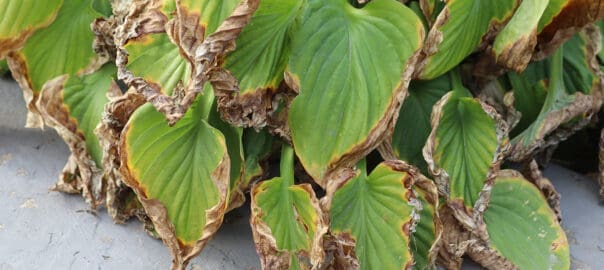
Amino acid humic fulvic acid summer heat stress is not one failure. It is a cascade. By the time you see it on the turf surface or in the canopy of a newly installed ornamental, the physiological breakdown has been compounding beneath the surface for weeks. Cell membranes are losing integrity. Stomata have been closing to restrict water loss. Nutrient uptake in the root zone has slowed or stopped entirely. And photosynthetic output has been falling off long before the first visual symptom appears.
The professionals who manage this window well are not reacting to what they can see. They are working ahead of what they know is coming.
Why Does Summer Heat Stress Hit So Hard, So Fast?
Heat and drought create overlapping failures that reinforce each other. As temperatures climb, stomatal closure reduces CO2 intake and slows photosynthesis. Cellular osmotic balance is disrupted. Enzyme systems responsible for nutrient movement lose efficiency. At the same time, the root zone, already compressed by compaction and reduced biological activity in summer, becomes less capable of supplying what the plant needs at the exact moment demand is highest.
For creeping bentgrass maintained at close mowing heights, this pressure is acute and unforgiving. For landscape ornamentals and recently transplanted trees, the same cascade drives shoot dieback and root decline that no irrigation adjustment fully corrects. Understanding what is really driving stress at the physiological level is the first step toward building a program that actually prevents it.
What Do Amino Acids Actually Do Under Heat and Drought Pressure?
L-amino acids function as osmolytes inside plant cells. They accumulate in tissue to maintain osmotic balance and cellular turgidity when water availability drops, and this response is well-documented in field-relevant research. Published studies confirm that L-proline and glycine betaine build up in stressed leaf tissue to protect membrane integrity and support enzyme function when heat disrupts normal cellular chemistry (Hayat et al., 2012; Khalid et al., 2022).
Beyond osmotic regulation, L-amino acids serve as natural chelators for nutrient ions in the root zone. When heat and drought conditions would otherwise make fertility inputs unavailable, amino acid chelation keeps those nutrients accessible to the plant. Research published in Horticulturae in 2025 found that amino acid biostimulants applied to creeping bentgrass under combined heat and drought stress improved turf quality, photochemical efficiency, and antioxidant enzyme activity while measurably suppressing oxidative stress damage in leaf tissue (Zhang et al., 2025).
The practical outcome is a plant that has better tools to maintain function rather than shutting down when summer heat stress peaks.
How Do Humic Acids Protect the Root Zone and Plant Through Peak Summer?
Humic acids address amino acid humic fulvic acid summer heat stress from the soil up. Their value during this window is structural and biological, not fertility-based. Humic acids function as water sponges within the soil profile, creating a desirable structure that facilitates infiltration and holds moisture in the root zone where roots can access it.
Applied as a foliar spray, humic acids significantly reduce water evaporation from plant surfaces, increase cellular water uptake, and intensify enzyme systems within the plant (BioPlex Organics, Growing Smart). Research confirms that humic substances enhance carbohydrate content and nutrient concentration in leaf blades and sheaths while under stress, directly supporting the energy reserves the plant needs to recover between heat events. Peer-reviewed research published in Scientific Reports demonstrated that humic acid upregulates heat-shock protein gene expression in plant tissue, including HSP101, HSP81.1, and HSP17.6A, providing molecular chaperone protection during heat stress events. A 2025 review in Plants confirmed that humic acids alleviate abiotic stress through multiple pathways, including water retention and root zone structure improvement.
For soil health and root zone support, humic acids also sustain the rhizosphere biology that drives long-term plant performance. A biologically active root zone is not a background benefit during summer. It is a front-line defense.
What Makes Fulvic Acid a Critical Part of Summer Nutrient Management?
Fulvic acids are smaller in molecular weight than humic acids, which allows them to penetrate plant cell membranes more readily and accelerate the uptake and translocation of nutrients through plant tissue. When heat has disrupted normal nutrient mobility in both the root zone and inside the plant, fulvic acids provide a delivery pathway that bypasses the bottlenecks that stress creates.
Research published in the Journal of Soil Science and Plant Nutrition in 2024 confirmed that fulvic acid application under heat stress conditions improves cell membrane stability, increases proline accumulation in leaf tissue, and improves overall nutrient uptake compared to untreated controls. A 2016 study in Acta Biologica Cracoviensia found that fulvic acid pre-treatment maintained higher relative water content in plant leaf tissue under combined heat and salt stress (Dinler et al., 2016). Every other input in your summer program moves more effectively when fulvic acid is part of the application sequence.
Why Do These Three Compounds Work Better Together Than Any Single Input?
The amino acid humic fulvic acid summer heat stress connection is a systems story. Each compound covers a different failure point in the same cascade, and together they address what no single-input approach can.
Here is how the three layers work together across the summer stress window:
- L-amino acids maintain cellular turgidity and osmotic balance, support stomatal function, protect enzyme activity, and chelate nutrients to keep them plant-available when heat and drought would otherwise lock them out
- Humic acids improve soil structure and water retention to protect the root zone environment, reduce evaporation from soil and plant surfaces, and enhance carbohydrate content in stressed leaf tissue
- Fulvic acids increase cell membrane permeability and accelerate the translocation of every nutrient the plant needs, ensuring what is applied actually reaches the tissue where it matters most
- Seaweed extract, which works synergistically with all three, stimulates cytokinin production in turfgrass roots, encouraging fibrous root mass development and stronger collection points for photosynthates and nutrients
Research from Ascophyllum nodosum studies consistently shows that seaweed applications improve stomatal conductance, regulate stress-response gene expression, and reduce the physiological burden of heat and drought on plant tissue (Shukla et al., 2017; Carmody et al., 2020). The biology works through layering, and amino acid humic fulvic acid summer heat stress management is inherently a layered problem.
When Should You Be Applying These Inputs to Stay Ahead of Summer Decline?
Timing is as important as product selection. The goal is to support plant physiology before the stress window peaks, not after visible decline forces a reactive response.
Start with the soil environment early in the summer window. Humic acid applications should be establishing water retention and root zone biology before compaction and dryness reduce the effectiveness of surface inputs. Layer L-amino acid and fulvic acid applications on a consistent interval through the heat window as a proactive physiological support program. Add a foliage film application when conditions are at their worst to physically reduce transpiration loss during peak exposure. Deliver nitrogen in a targeted, biologically active form that supports turf quality without pushing the soft, stress-vulnerable growth that summer punishes. For more on building a seasonal approach, read about professional turfgrass stress management and how timing shapes outcomes.
Stop Managing Summer Stress. Start Staying Ahead of It.
If heat and drought are still catching your program off guard every year, the biology is telling you something. Amino acid humic fulvic acid summer heat stress does not have to mean reactive damage control, lost plant material, or inconsistent turf performance through your hardest months. The right inputs, applied in the right sequence, change the outcome.
BioPlex Organics has been helping green industry professionals build smarter, biology-first programs since 1987. Whether you manage golf course turf, commercial landscapes, or nursery production, our summer stress lineup is built to keep your plants performing when conditions are at their worst. Take a look at what we carry and build a program that works before the heat does.
SOURCES
- Hayat, S., Hayat, Q., Alyemeni, M.N., Wani, A.S., Pichtel, J., and Ahmad, A. “Role of Proline Under Changing Environments: A Review.” Plant Signaling and Behavior, 7(11), 1456-1466. 2012. https://doi.org/10.4161/psb.21949
- Khalid, M., Rehman, H.M., Ahmed, N., et al. “Using Exogenous Melatonin, Glutathione, Proline, and Glycine Betaine Treatments to Combat Abiotic Stresses in Crops.” International Journal of Molecular Sciences, 23(21), 12913. 2022. https://doi.org/10.3390/ijms232112913
- Zhang, X., Goatley, M., Focke, M., Sherman, G., Smith, B., Motsinger, T., Roue, C., and Goos, J. “Amino Acid Biostimulants Enhance Drought and Heat Stress Tolerance of Creeping Bentgrass (Agrostis stolonifera L.).” Horticulturae, 11(7), 853. 2025. https://doi.org/10.3390/horticulturae11070853
- “Humic Acid Enhances Heat Stress Tolerance via Transcriptional Activation of Heat-Shock Proteins in Arabidopsis.” Scientific Reports (Nature Publishing Group). 2020. https://doi.org/10.1038/s41598-020-71701-8
- “Structure-Based Function of Humic Acid in Abiotic Stress Alleviation in Plants: A Review.” Plants (Basel), 14(13), 1916. 2025. https://doi.org/10.3390/plants14131916
- Dinler, B.S., Gunduzer, E., and Tekinay, T. “Pre-treatment of Fulvic Acid Plays a Stimulant Role in Protection of Soybean (Glycine max L.) Leaves Against Heat and Salt Stress.” Acta Biologica Cracoviensia Series Botanica, 58/1, 29-41. 2016. https://doi.org/10.1515/abcsb-2016-0002
- “Fulvic and Salicylic Acids Improve Morpho-Physio-Biochemical Attributes, Yield and Fruit Quality of Two Mango Cultivars Exposed to Dual Salinity and Heat Stress Conditions.” Journal of Soil Science and Plant Nutrition, 24, 6305-6324. 2024. https://doi.org/10.1007/s42729-024-01968-7
- Shukla, P.S., Shotton, K., Norman, E., Neily, W., Critchley, A.T., and Prithiviraj, B. “Seaweed Extract Improve Drought Tolerance of Soybean by Regulating Stress-Response Genes.” AoB Plants, 10(1), plx051. 2017. https://doi.org/10.1093/aobpla/plx051
- Carmody, N., Goni, O., Langowski, L., and O’Connell, S. “Ascophyllum nodosum Extract Biostimulant Processing and Its Impact on Enhancing Heat Stress Tolerance During Tomato Fruit Set.” Frontiers in Plant Science, 11, 807. 2020. https://doi.org/10.3389/fpls.2020.00807
